The “Byzantine” part of @byzantineprof
In-Depth Introduction Post 1 of 2

I want to begin this account with a couple of posts introducing my thoughts behind the two main features of my handle: the “Byzantine” part and the “prof” part. Today we focus on the former, and tomorrow on the latter. I study the “Byzantine Empire,” but these days that statement requires a major asterisk. It’s no surprise to insiders of my field (often called Byzantinists) that we are currently undergoing revolutionary flux about the name of the field and the appropriate name to give to the civilization and people that we study. However, non-academics may not be as aware. The terms “Byzantine Empire” and “the Byzantines” are increasingly under challenge for obfuscating the historical reality of the name of the civilization and the self-identification of the people that lived in it. Put simply, the people we refer to as “Byzantines” did not generally refer to themselves in this way, and if they occasionally did it was in a very specific and limited context. For example, a seventh-century emperor might refer to “Byzantine Romans” when in discussion with the pope in Rome (see Theodoropoulos 2021). Or a late antique historian might refer to a native of Constantinople (originally named Byzantium) as a “Byzantine” as a classicizing measure (e.g. Procopius, Buildings 2.8.25). But there is an avalanche of evidence that it was much more common for the inhabitants of this state to identify as Romans, and to describe their state as the empire of the Romans, and their ruler as the emperor of the Romans (see Kaldellis 2019). This holds true across centuries. Because of this evidence, there has been a push led primarily by Anthony Kaldellis and Leonora Neville to encourage the field to begin dropping the term “Byzantine” and to adopt “East Roman” as a new adjective to describe the society and people.


I think it is fair to say I am a devotee of the revolution against the term “Byzantine.” The Byzantine Empire was simply the Roman Empire given a different name by those hostile to its Roman identity. This hostility has long roots, dating back to the eighth century. In most cases, the hostility has to do with Western European powers wishing to claim the name “Roman” for themselves, which meant denying it to the Romans governed from Constantinople. In my most recent book, I therefore avoided using the term “Byzantine” and instead styled the main characters of the book, Belisarius and Antonina, as Romans, and the state they served as the Roman Empire.
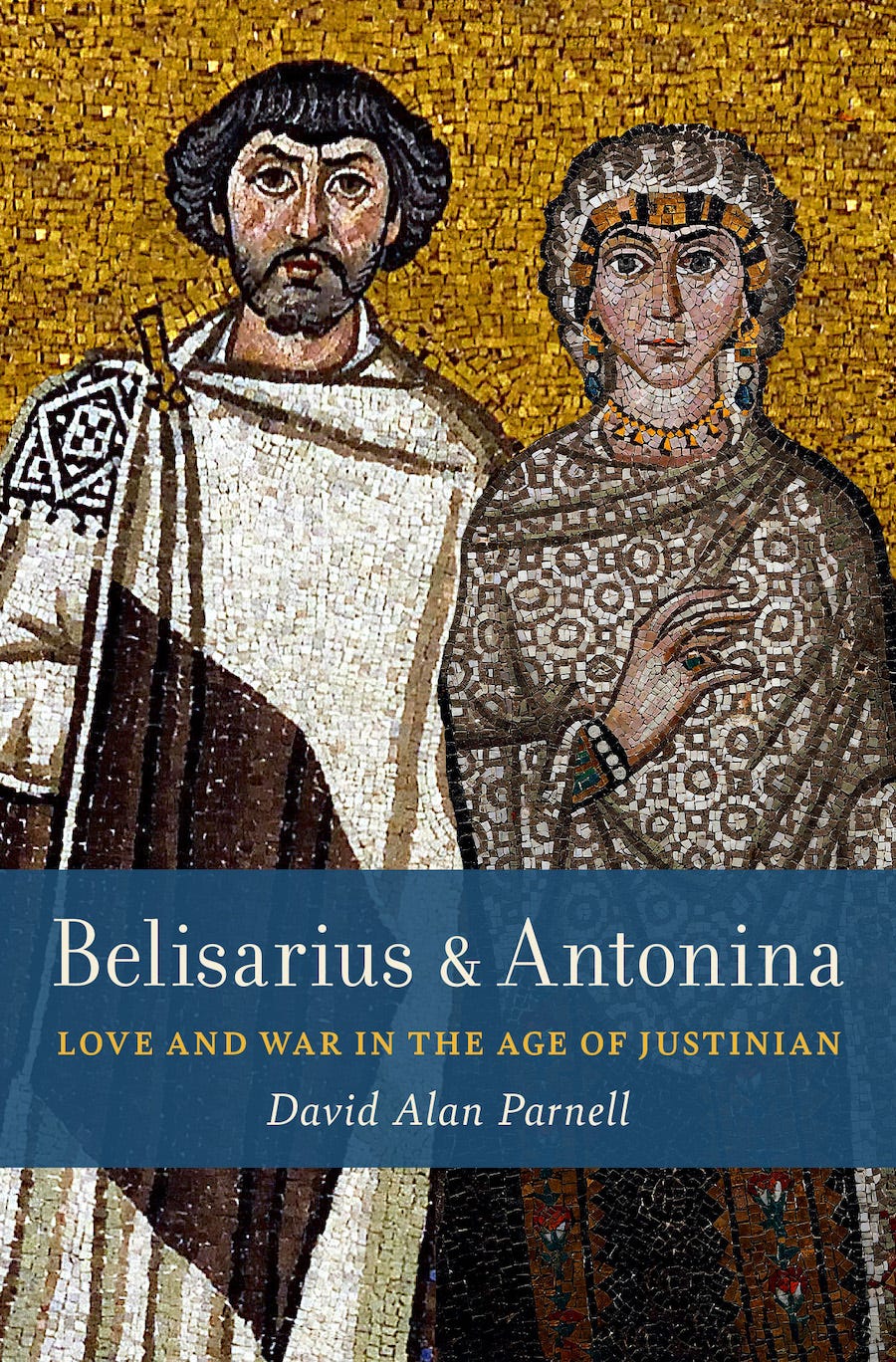
But the revolution is not complete or without challenge. Many scholars still prefer the term “Byzantine.” Sometimes this preference is governed by practical considerations, like funding being attached to the name of the discipline. In other cases, some still believe that the medieval Roman state was different enough from the ancient Roman state that it should receive a different name from modern historians. However, I have never seen a satisfactory explanation for this case. If the “Byzantine Empire” is different from the Roman Empire, then how is it different in a more significant way than, say, the fourth-century Roman Empire was different from the first-century Roman Empire? If there is to be a separate “Byzantine Empire,” then when exactly did it begin, and how was this change accomplished? I suspect that there are no truly convincing answers to these questions, but perhaps somebody will make a comment that will surprise me.
What we should call our subject if we rule out “Byzantine” is another question. Kaldellis and Neville make the case for “East Roman.” The term is… fine, but it has its own problems. The adjective “East” in some way continues the “othering” that the adjective “Byzantine” started. It separates out the history of the medieval Roman people from that big thing we call “Western Civilization.” And I am not sure that I want to concede that the medieval Romans were not a part of the West. Add to this the basic fact that the “East Roman” state at times included portions of the western Mediterranean (such as when Constantius II was sole ruler in the fourth century, or when Justinian I restored Roman rule in the west in the sixth century, or even as late as the eleventh century in southern Italy). Should we speak of the inhabitants of seventh-century Carthage as East Romans? Careful readers can probably already guess that I prefer “medieval Roman,” as I have been using that term occasionally throughout this essay. As originally conceived, “medieval” does have a value judgment attached to it – the “middle ages” between the glory of the ancient world and the glitz of the renaissance were historically not thought of positively. But perhaps it is possible to strip the early modern value judgment from the term “medieval” and conceive of the term purely chronologically, as the era which followed the ancient period, and it is in this sense that it is a reasonable modifier on “Roman.” For me there was a single, long-lived Roman Empire that existed from Augustus to Constantine XI, and therefore in both the ancient and medieval periods.


One last thought on the subject: I think it is important that even we devotees of the revolution against the term “Byzantine” admit that something is lost in this transition. The “Byzantine Empire” has been with us a long time now, and it conjures up a very specific image in the mind of the reader. Sure, parts of that image are quite negative: those Byzantines are imagined to be deceitful, complicated, decadent, and weak. But other parts of that image conjure up romance, exoticism, devotion, and wealth. For good or ill, “Byzantine” means something to many, whereas “medieval Roman” or “East Roman” does not have the same kind of cultural cachet. This can change over time, as one of the new terms will hopefully begin to accumulate the positive cultural resonances of “Byzantine” while ideally leaving behind the negative ones. But this kind of change will take at least a generation, and in the meantime those of us opting not to use the term “Byzantine” are losing, in an unquantifiable way, the cultural cachet built up by almost two centuries of use of the old name.
I am glad you started a Substack. I’ve enjoyed the tweets and the book. So I am happy for more writing on your favored topics.
I am entirely sympathetic to the naming arguments offered by AK and others, including yourself here. But I think your last paragraph is the most important one. There is a basic constraint here that the broader population, including the educated non-academics, are unlikely to get on this train with the historians. So you trade one odd juxtaposition (calling the subject something it didn’t call itself much) for another one (calling the subject something that few others today, including taxpayers funding research and potential students looking up possible courses and majors, do).
The Eastern/Medieval/Byzantine Romans (we can see the difficulty here…) feature in some of my political science research on autocracy, but even for this academic audience (just not medieval historians) it’s a chore to try to explain what I am talking about and invites distraction from the main point of the research, which we would all like to avoid in peer review.
Fantastic article and the first of many more to come I hope!